Downtown Phoenix Living
What to do in Downtown Phoenix, a Peek Into its Future, and its Historical Path
ENTER MLS and Search all Historic Central Phoenix Homes For Sale
Downtown Phoenix, AZ is just exploding with growth in all areas.
Culture, culture, culture. That's what Phoenix, AZ residents have been craving and are finally getting.
Here, you'll learn everything about the massive growth Phoenix, AZ is experiencing and the future it holds, and of course, its past. You'll be able to examine some incredible data on Phoenix's History which will give you an idea of how, why & where the growth in downtown Phoenix is heading.
You'll also be linked to TONS of fun & cool stuff happening downtown, midtown and all around town RIGHT NOW! And, you'll be able to see what's on its way.
Not only in Real Estate, but in the culture that's finally coming to Phoenix, in food, in entertainment, in politics, in education, in business and much, much more, Phoenix is well on its way to becoming the next major megatropolis with urbanization happening everywhere.
Also, check out a couple of my resource pages that will take you just about to anything you want or need and check ot all the Phoenix Historical Districts in Downtown Phoenix.
Introduction to Downtown Phoenix Living & Lifestyle
Downtown Phoenix is urban living. It is a series of distinct urban and historic neighborhoods where neighbors know each other and are constantly welcoming new neighbors as the downtown area continues its growth.
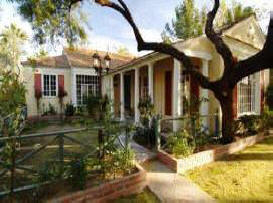
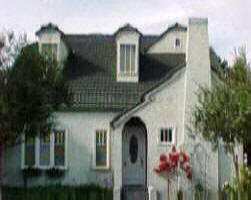
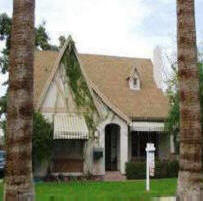
You can walk for coffee, breakfast, lunch, dinner, drinks and entertainment including the First Friday Art Walk, museums, sporting events, shopping, parks and more. It is a place populated by people seeking a way of life that doesn't require hours of commuting each day. many people enjoy driving any one of the many Historic Phoenix Districts just to view the architectural designs of the beautiful homes that encompass Phoenix Historic neighborhoods.
Copper Square is one of the coolest places to buy a home. While downtown Phoenix grows, you can and experience urban living at its best. No matter what your taste there are homes that will make you happy. Live in an area full of cultural venues and experience the convenience a downtown residence can provide whether in a modern or historic condominium, historic loft, or a town home. Come be part of downtown life.
Click here to read about Roosevelt Row's area and homes for sale.
Introduction to Phoenix
Phoenix, AZ, is the fifth largest city in the United States. According to U.S. Census data, Phoenix is the 14th largest metropolitan area in the United States. Phoenix is also the capital of Arizona, as well as the largest city and largest metropolitan area in Arizona. Phoenix is the largest capital city by population, and the third largest capital city by area in the United States.
Phoenix is located in central Arizona, in the southeastern United States. It is 20 minutes west of Tempe, and 20 minutes southwest of Scottsdale. Phoenix is home to more than five Fortune 1000 company headquarters, including well-recognized names such as Avnet, Phelps Dodge, and Pet Smart. Nearby Tempe is home to US Airways. Other companies with major operations in Phoenix include: Intel, Motorola, AlliedSignal, Honeywell, Boeing, American Express, Prudential, Charles Schwab and more.
Phoenix has received the National Civic League's prestigious "All-America City" Award four times. In 1993, Phoenix was selected as the "Best Run City in the World" by the Bertelsmann Foundation of Germany.
Phoenix has an arid climate that is characterized by some of the hottest seasonal temperatures anywhere. Phoenix averages 325 sunny days and less than eight inches of rain a year. The hottest recorded summer temperature was 122 degrees Fahrenheit. Snow is very rare in Phoenix, though it still can occur occasionally.
About Phoenix
Phoenix is the capitol of Arizona state, and was incorporated as a city on February 5, 1881. Phoenix is located in central Arizona in the southwestern United States, 118 miles (188 kilometers) northwest of Tucson. Phoenix is Arizona's largest city and largest metropolitan area by population. It is also the county seat of Maricopa County and the principal city of the Phoenix metropolitan area. Phoenix is appropriately called Hoozdo, or "the place is hot", in the Navajo language and Fiinigis in the Western Apache language.
In 2006 Phoenix was the sixth largest city in the United States according to the U.S. Census Bureau. The 2000 U.S. Census reported the Phoenix Metropolitan Statistical Area (MSA) as the fourteenth largest in the U.S., with a population of 3,251,876. The city's MSA grew to an estimated 3,790,000 by 2004. Between 1990 and 2000, the metropolitan area grew by 34 percent, making it the eighth fastest growing metropolitan area in the U.S. Phoenix is the largest capital city by population in the U.S., and the third largest capital city by area in the U.S. Phoenix has been selected four times since 1950 as an All-America City, rare among larger cities. The hallmark of an All-America City is the extent to which its private citizens get involved in the workings of their government. Thousands of citizens have served on various city committees, boards and commissions to assure that major decisions are in the best interest of the people.
Phoenix History
The original settlers of what was to become Phoenix were the Hohokam Indian people, who lived there as early as 300 BC. The first non-native American settlers founded a farming community near what was to become Phoenix. The Town of Phoenix was officially recognized in May of 1868. Phoenix was incorporated as a city in 1881. At that time it had a population of approximately 2,500 people.
Phoenix Valley History
After the first efforts to create an Arizona Territory from what was then the New Mexico Territory failed, the Civil War and concern for control of potential railroad routes to the riches of California brought approval for an Arizona Territory.
Representative James H. Ashley of Ohio introduced the Arizona Organic Act in the House of Representatives in 1862. The act, approved in both houses of Congress, was signed by President Abraham Lincoln in 1863.
The vacant adobe homes had been silent for 400 years.
The Valley waited patiently for a person with vision to arrive. In 1867, such a man appeared. In 1867, Jack Swilling of Wickenburg stopped to rest his horse at the foot of the north slopes of the White Tank Mountains. He looked down and across the expansive Salt River Valley and his eyes caught the rich gleam of the brown, dry soil turned up by the horse's hooves. He saw farm land, predominately free of rocks, and in a place beyond the reach of heavy frost or snow. All it needed was water.
Returning to Wickenburg, he organized the Swilling Irrigation Canal Company, and moved into the Valley. The same year, the company began digging a canal to divert some of the water of the Salt River onto the lands of the Valley. By March 1868, water flowed through the canal, and a few members of the company raised meager crops that summer.
By 1868, a small colony had formed approximately four miles east of the present city. Swilling's Mill became the new name of the area. It was then changed to Helling Mill, after which it became Mill City, and years later, East Phoenix. Swilling, having been a confederate soldier, wanted to name the new settlement Stonewall after Stonewall Jackson. Others suggested the name Salina, but neither name suited the inhabitants. It was Darrell Duppa who suggested the name Phoenix, inasmuch as the new town would spring from the ruins of a former civilization. That is the accepted derivation of our name.
Phoenix officially was recognized on May 4, 1868, when the Yavapai County Board of Supervisors, the county of which we were then a part, formed an election precinct here.
The City of Phoenix in the 1860's was occupied by area farmers near the modern cross-streets of Van Buren and Central Av. It is named after the mythical Egyptian bird that rose from ashes by "Lord" Darrell Duppa. Phoenix rose from the ashes of the Hohokam culture. Mesa was already a city of about 1000 people about 22 miles east. Hayden's Ferry (present-day Tempe) was a small farming community just starting to take shape. Most of the area now covered by urban and suburban neighborhoods was formerly cultivated land of citrus, cotton, and lettuce.
A post office was established in Phoenix on June 15, 1868, with Jack Swilling as postmaster. The sharp whistle of the first steam mill in the Valley added a brisk note to the sound of emerging industry. It advertised the Richard Flour Mills, built in 1869, where the Luhrs Tower now stands.
To administer this new townsite, the Salt River Valley Town Association was formed with its articles carrying the following signatures:
Darrell Duppa
Wm. B. Hellings & Co.
Barnett and Block Thomas
Barnum James Murphy
John T. Dennis
William A. Holmes
James M. Buck
Jacob Starar
John T. Alsap
Columbus H. Gray
Martin P. Griffin
James McC. Elliot
J. P. Perry
William Rowe
Michael Connell
Daniel Twomey
Charles C. McDermott
Edward Irvine
John P. Osborn
Andrew Starar
Paul Becker
James D. Monihon
Capt. Hancock was also a surveyor, and he made the first survey of the townsite and laid out the lots and the town. This first town of Phoenix was one mile long, a half-mile wide and contained 96 blocks. Washington Street was the main street and, on the early maps, showed to be 100 feet wide.
The east and west streets were named after our presidents. Washington Street was placed in the middle and Adams, who was the second president, was given the first street to the north. Our third president, Jefferson, had the first street south of Washington named after him. And the pattern followed - one to the north and one to the south - until recent years.
The north-south streets originally carried Indian names, but these were changed in favor of the more easily remembered numbers - with streets being to the east of Central Avenue and avenues to the west.
The Prescott Miner carried the following advertisement on Dec. 7, 1870:
"GREAT SALE OF LOTS AT
PHOENIX, ARIZONA
on the 23rd and 24th of December."
The first effort resulted in the sale of 61 lots at an average price of $48 each. The first lot was purchased by Judge William Berry of Prescott. It was the southwest corner of First and Washington streets, and he paid the rather steep price of $116.
The first store building to be erected in the new town was Hancock's Store, a general store opened in July 1871, by William Smith. The adobe structure was built on the northwest corner of First and Washington streets and served as the town hall, county offices and general meeting place of early Phoenix.
Although various religious organizations had been formed by 1870, the first church building erected in Phoenix was the Central Methodist Church built in 1871 at the corner of 2nd Avenue and Washington Street.
The first Catholic priest came to Phoenix in 1872, but it was not until after 1881 that an adobe church building, the Sacred Heart of St. Louis at Third and Monroe streets, replaced the Otero home as a place for Catholics to worship.
Yavapai County was divided on Feb. 12, 1871, when Maricopa County was created by the Legislature. The sixth county in the state, Maricopa, gave up portions in 1875 and 1881 to help form Pinal and Gila counties, respectively.
The first county election was held in 1871, when Tom Barnum was elected the first sheriff of Maricopa County. As a matter of historical interest, a shooting between two other candidates for the office, J. A. Chenowth and Jim Favorite, resulted in Favorite's death and Chenowth's withdrawal from the race.
Schooling for Phoenix's youth began on September 5, 1872. About 20 children studied under the guidance of Jean Rudolph Derroche in the courtroom of the county building. By October 1873, a small adobe school building was completed on Center Street (now Central Avenue), a short distance north of where the San Carlos Hotel now stands. Miss Nellie Shaver, a newcomer from Wisconsin, was appointed as the first female schoolteacher in Phoenix.
Whole Town Worth $550
On April 10, 1874, President Grant issued a patent to Judge Alsap for the present site of Phoenix. The declaratory statement was filed at the Prescott Land Office on Feb. 15, 1872. Official entry was made at the Florence Land Office on Nov. 19, 1873. The total cost of the Phoenix Townsite of 320 acres was $550, including all expenses for services.
In 1874, downtown lots were selling for $7 to $11 each. That year also marked the entry into Phoenix of the first telegraph line. Morris Goldwater was the first operator of this station, located in his father's store on the northwest corner of First and Jefferson streets.
By 1875, there were 16 saloons, four dance halls, two monte banks and one faro table in Phoenix. The townsite-commissioner form of government, however, was not working well. At a mass meeting held at the courthouse on Oct. 20, 1875, an election was held to select three village trustees and other officials.
By the 1880s, the Arizona Territory was bustling with fortune seekers hoping to strike it rich mining gold, copper, and silver. The town of Prescott was founded in 1863 by New Englanders searching for gold. Nearly 7,000 people came to southeastern Arizona in the wake of Ed Schieffelin's 1877 discovery of silver at Tombstone, near Tucson.
A safe location was required for the money being made in the Valley. To solve the problem, the National Bank was established in 1878 with capital stock of $200,000.
The first newspaper in Phoenix, the Salt River Valley Herald, changed its name to the Phoenix Herald in 1880. By this time, the paper had progressed from a weekly publication to semiweekly.
In 1880 Phoenix had a population of 2,453, a school enrollment of 379 pupils, an ice factory and a new brick sidewalk in front of the Tiger Saloon. On Nov. 26 of that same year, Maricopa County had its first legal hanging.
Just as Phoenix had outgrown its original townsite-commissioner form of government, it grew too large for the village trustee operation. "The Phoenix Charter Bill" was passed by the 11th Territorial Legislature. The bill made Phoenix an incorporated city and provided for a government consisting of a mayor and four council members. It was signed by Governor John C. Fremont on Feb. 25, 1881.
On May 3, 1881, the first election was held in the newly incorporated city with a population of approximately 2,500.
In the center a bird rising, and surrounding this the inscription Phoenix, Arizona - Incorporated February 25, 1881."
The first horse-drawn streetcar line was built along some 2 miles of Washington Street in 1887, and the kick off of this new mode of transportation was on Nov. 5. An additional line was installed along Center Street, and the first car moved over those shaky rails on Dec. 30, 1889. The streetcar system became rather extensive in later years, with tracks covering most of Phoenix and extending even to Glendale.
July 4, 1887, would have been just another Independence Day had not the first Southern Pacific train arrived that day from Maricopa Wells. This had been a long-anticipated event.
The coming of the railroad was the first of several important events that revolutionized the economy of this area. Merchandise now flowed into the city by rail instead of wagon. Our products went quickly to eastern and western markets. In recognition of the increased tempo of economic life, the Phoenix Chamber of Commerce was organized on Nov. 4, 1888.
That same year, the city offices were moved into the new City Hall, built where the downtown bus terminal now stands. This building also provided temporary offices for the territorial government when they were moved to Phoenix from Prescott in 1889.
The location of Arizona's Capitol had been moved several times since 1864. It was first established at Navajo Springs, then Prescott, then Tucson after an attempt to move it to La Paz failed, then back to Prescott, and finally to Phoenix.
The first transcontinental railroad was, however, constructed along a more northerly route by the "big four" of western railroad construction--Collis P. Huntington, Leland Stanford, Mark Hopkins, and Charles Crocker. A southern transcontinental route through territory acquired by the Gadsden Purchase was not a reality until 1881 when the tracks of the "big four's" Southern Pacific met those of the Atchison, Topeka and Santa Fe in the Territory of New Mexico.
Twenty years had passed since Phoenix, like its legendary namesake, had risen from the ashes of a bygone community. The 1890s showed further indications of the heights to which this city would some day soar. The Arizona Republic became a daily paper in 1890, with Ed Gill as its editor.
In those days, none of the great reservoirs north of the Valley had been created to control the flow of water to the Valley. The year 1891 was marked by the greatest flood in the Valley's history, as well as by the advent of the first telephone system in Phoenix.
The horse-drawn streetcars were replaced in 1893 by electric cars. The electric cars stayed on the streets until the automobile replaced them on Feb. 17, 1948. On March 12, 1895, the Santa Fe, Prescott and Phoenix Railroad ran its first train to Phoenix. It connected Phoenix with the northern part of Arizona and gave travelers another outlet to the east and west via the Santa Fe.
The additional railroad speeded the capitol city's rise to economic supremacy in the state. That same year, 1895, the Phoenix Union High School was established, and 90 young people were enrolled.
In 1897, an organization of 14 women called the Friday Club, started the public library movement in Phoenix. Their efforts led to formation of the Phoenix Library Association in 1899. The members subscribed at an annual rate of $3 for the maintenance of the small library housed in two upstairs rooms in the Fleming Building at First Avenue and Washington Street. The Phoenix City Council, however, levied a 5-mill tax for its public library a few months after the 1901 Legislature passed a bill allowing a tax to be applied to the support of free libraries. This action satisfied the conditions set by Mr. Andrew Carnegie in his proposal to donate a library building to the city. The Carnegie Free Library was opened on Feb.18, 1908.
Some key dates in Phoenix's history include:
In 1911, the Theodore Roosevelt Dam near Phoenix, then the largest masonry dam in the world, began operation.
In 1912, Phoenix became a state capital with Arizona statehood.
In 1924, President Calvin Coolidge sold 13,000 acres of South Mountain to Phoenix. This was to become South Mountain Park, which, at its present size of 16,500 acres, is the largest metropolitan park in the world. Every year South Mountain Park sees three million visitors.
Phoenix Arts and Culture
Phoenix is a center of arts and culture. Phoenix offers museums, the performing arts, and much more. Some of Phoenix's more notable museums include:
The Arizona Science Center
The Desert Botanical Garden in nearby Papago Salado
The Heard Museum
The Phoenix Art Museum
The Phoenix Museum of History
The Phoenix Zoo in nearby Papago Salado
The Pueblo Grande Museum and Cultural Park in nearby Papago Salado
For patrons of the performing arts, Phoenix has a lot to offer. Some of the more notable attractions include:
The Actor's Theatre of Phoenix
The Arizona Opera
Ballet Arizona
The Herberger Theater Center
The Orpheum Theatre
The Phoenix Symphony Orchestra
The Phoenix Theatre
Phoenix Sports and Leisure
Phoenix has plenty to offer to keep sports fans happy. Phoenix is home to the following major sports teams:
Baseball - The Major League Baseball (MLB), Arizona Diamondbacks. In addition, in the spring of every year, nine major league baseball teams come to the Phoenix area for spring training.
Basketball - The National Basketball Association (NBA) Phoenix Suns, and the WNBA Phoenix Mercury.
Football - The National Football League (NFL) Arizona Cardinals.
Hockey - The National Hockey League (NHL) Phoenix Coyotes.
Lacrosse - The National Lacrosse League (NLL) Arizona Sting play in nearby Glendale.
Nearby Tempe is also home to the NCAA College Football Fiesta Bowl and Insight Bowl. Phoenix is also often referred to as the "golf capital of the world" with more than 200 golf courses in the greater Phoenix area.
Phoenix's dry and sunny climate make it an ideal location for a wide variety of outdoor activities. In addition to "normal" outdoor activities such as roller blading, biking, horseback riding, hiking, boating and more, Phoenix is an ideal location for more exotic outdoor activities such as hot-air ballooning, or soaring in a glider.
Phoenix "Must See" Attractions
Phoenix has attractions too numerous to do justice in a simple list. Some of Phoenix's more unique attractions include:
The Desert Botanical Garden
The Pioneer Arizona Living History Museum
The Pueblo Grande Museum and Cultural Park
South Mountain Park, the largest municipal park in the world
Phoenix at Night
As one would expect of a city in the southwest, Phoenix restaurants offer wonderful southwestern, Latino, and Mexican cuisine. But Phoenix also offers a good selection of other cuisine, including eastern cuisine such as Thai, Vietnamese, and Japanese, as well as the cuisine of many other cultures. If interests turn more to the evening nightclub scene, Phoenix offers everything from brew pubs, to sports bars, dance clubs, and country. Good places to look for the latest venues and happenings include "The Rep Entertainment Guide" section of the Arizona Republic, the weekly New Times, and Where Phoenix/Scottsdale Magazine.
Downtown Phoenix
The downtown area of Phoenix has been undergoing a major facelift since the building of the US Airways Center (formerly America West Arena) and Chase Field (formerly Bank One Ballpark). Coffeehouses, restaurants, nightclubs and shopping in the Arizona Center continue to draw people downtown for the hopping nightlife. Many new restaurants have blossomed, including A League Of Our Own. Incorporating the themes of Phoenix's early history with culture and local events, Copper Square is a full square-mile hotspot for activities and action. Downtown attractions include a walk in the park at Patriots Square or delve into the new Arizona Science Center, Phoenix Museum of History or the Phoenix Art Museum.
Also read "What You Can Expect From Laura B."